
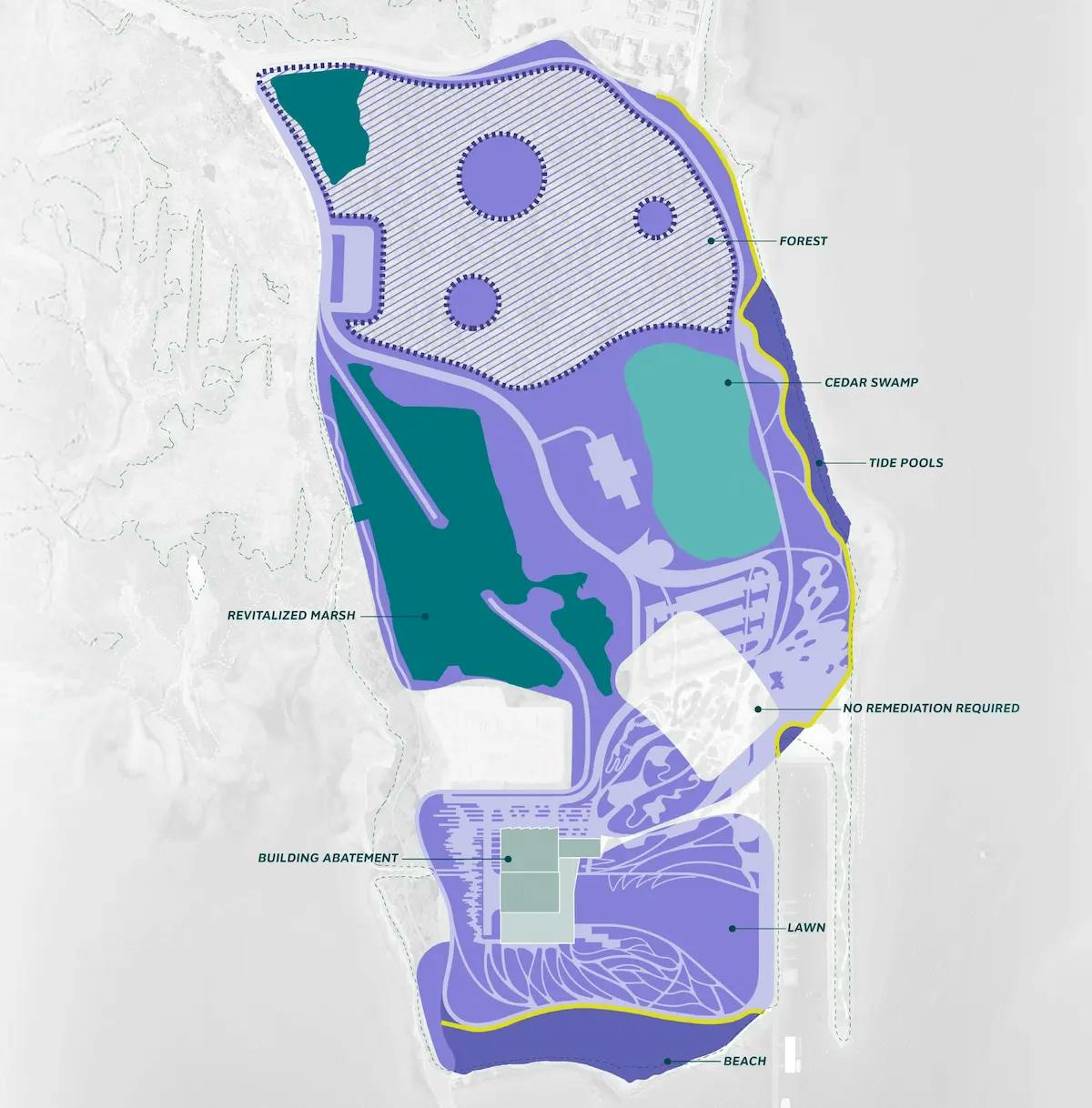
What is now a toxic, ecologically fragile, and inaccessible site will be transformed into a vibrant mosaic of revived coastal habitats—from breathtaking shoreline to acres of thriving wetlands and unique forests. These are places to swim, paddle, wander, and explore, with each landscape containing its own rhythm, ecology, and lore.
Beach & Promenade
The public beachfront will stretch along the southern shore, with space to splash, stroll, or just watch the tide roll in. A welcoming promenade will bring people together for strolls, conversation, and cuisine and a kayak launch gets you straight into the Sound.
The Northern Forest
The Northern Forest—opening spring 2027—offers 28 acres of renewed woodland, open grasslands, and over a mile of trails winding through three distinct forest pockets. Whether you're looking for a morning walk, a shaded picnic spot, or a quiet place to sit, the forest is designed for everyday escape.
Lawn
The 3.5-acre community lawn is the green heart of Manresa Wilds—a flexible, open landscape framed by meadow edges and forested areas, with views stretching to Long Island Sound. Terraced seating, shaded hangouts, and open space invite picnics, informal play, and community gatherings of many sizes.
Tidal Pools
Along the eastern shoreline, a series of rocky tidal pools, coves, and overlooks invite close encounters with Connecticut's coastal ecology. These are places to observe, discover, and learn—where the rhythm of the tides reveals the life of Long Island Sound up close.
Wetland Exploration & Scrub Scramble
Over 13 acres of native salt and freshwater wetlands are being restored and protected, with trails and observation areas that bring visitors into one of the region's most vital ecosystems while protecting natural resources. The Scrub Scramble is where the landscape becomes a playground, inviting visitors to climb, explore, and experience nature on their own terms.
Atlantic White Cedar Swamp
Tucked into the landscape, this rare ecology is a hidden gem. The Atlantic white cedar—tall, ancient, and increasingly uncommon in the region—still grows here. Teeming with life, the fresh water source will be a hub for learning about the role native habitats play in coastal resilience.

Beach & Promenade
The public beachfront will stretch along the southern shore, with space to splash, stroll, or just watch the tide roll in. A welcoming promenade will bring people together for strolls, conversation, and cuisine and a kayak launch gets you straight into the Sound.

The Northern Forest
The Northern Forest—opening spring 2027—offers 28 acres of renewed woodland, open grasslands, and over a mile of trails winding through three distinct forest pockets. Whether you're looking for a morning walk, a shaded picnic spot, or a quiet place to sit, the forest is designed for everyday escape.

Lawn
The 3.5-acre community lawn is the green heart of Manresa Wilds—a flexible, open landscape framed by meadow edges and forested areas, with views stretching to Long Island Sound. Terraced seating, shaded hangouts, and open space invite picnics, informal play, and community gatherings of many sizes.

Tidal Pools
Along the eastern shoreline, a series of rocky tidal pools, coves, and overlooks invite close encounters with Connecticut's coastal ecology. These are places to observe, discover, and learn—where the rhythm of the tides reveals the life of Long Island Sound up close.

Wetland Exploration & Scrub Scramble
Over 13 acres of native salt and freshwater wetlands are being restored and protected, with trails and observation areas that bring visitors into one of the region's most vital ecosystems while protecting natural resources. The Scrub Scramble is where the landscape becomes a playground, inviting visitors to climb, explore, and experience nature on their own terms.

Atlantic White Cedar Swamp
Tucked into the landscape, this rare ecology is a hidden gem. The Atlantic white cedar—tall, ancient, and increasingly uncommon in the region—still grows here. Teeming with life, the fresh water source will be a hub for learning about the role native habitats play in coastal resilience.